
Low Volume Ballistic Manufacturing: When RIM Beats Injection Molding
Defense contractors face a frustrating math problem. You need 500 ballistic panels. Or 2,000...
If you've spent your career designing parts for injection molding, your instincts are well-trained. You know to maintain uniform wall thickness. You design ribs conservatively to avoid sink marks. You think in terms of individual components that get assembled later.
Those instincts will limit you when you move to Reaction Injection Molding.
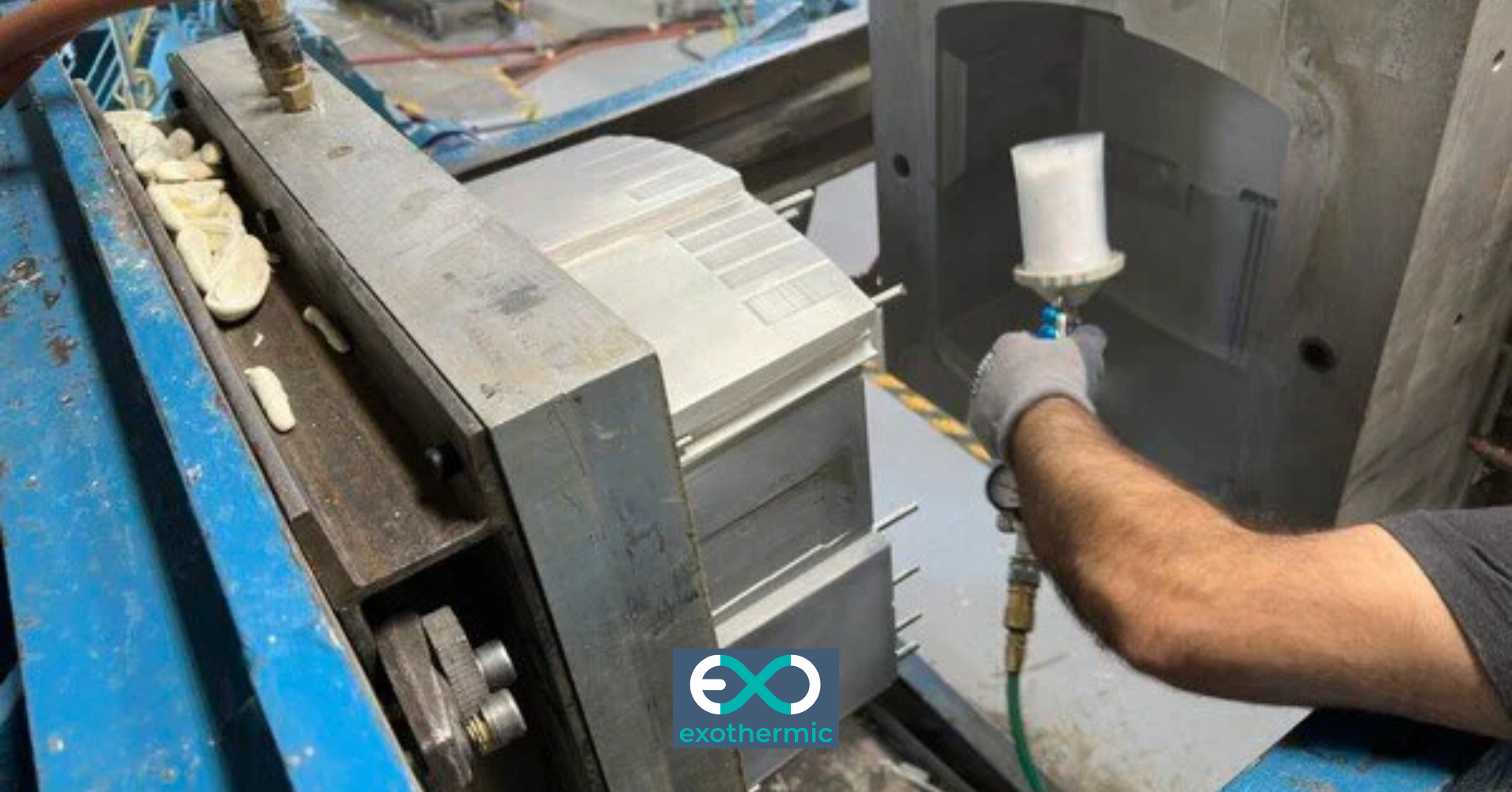
RIM operates under fundamentally different physics. Where injection molding forces molten thermoplastic into a steel mold at 10,000-30,000 psi, RIM injects two liquid components at just 50-150 psi. The materials react and cure in the mold rather than cooling from a molten state. This difference in pressure and chemistry changes what's possible—and what's optimal—in your part design.
Here are three mindset shifts that will help you take full advantage of RIM's capabilities rather than inadvertently designing around limitations that don't exist.
In injection molding, uniform wall thickness isn't a suggestion. It's a requirement. Variations cause uneven cooling, which leads to warping, sink marks, and internal stresses. You've probably spent hours redesigning parts to maintain consistent walls throughout.
RIM doesn't share this constraint. Because the liquid components remain fluid as they fill the mold and then cure through chemical reaction rather than cooling, you can design wall thicknesses ranging from 0.125" to 1.125" within the same part. Some applications push even further—structural sections exceeding 2" thick in areas that need it, tapering to thin walls where weight savings matter.
What does this enable? Consider a housing that needs substantial thickness around mounting bosses for load-bearing strength but can be thin across flat panel sections to reduce weight. In injection molding, you'd either overbuild the thin sections or add separate reinforcement components. In RIM, you design the wall thickness you actually need at each location.
This freedom also opens possibilities for integrating structural features directly into the part geometry. Thickened sections can replace what would otherwise be separate stiffening ribs or secondary structural members.
Injection molding trains you to think about discrete parts. You design a housing, then figure out how to attach brackets, integrate electronics, and assemble everything together. The high pressures and temperatures involved make encapsulating other components impractical or impossible.
RIM's low-pressure, low-temperature process inverts this thinking. You can encapsulate metal structural members, electronics, wire harnesses, antennas, magnets, and sensors directly into the molded part. The polyurethane bonds to these materials during the curing process, creating a unified component.
One medical equipment manufacturer faced a challenge with their centrifuge design. They needed a lightweight yet extremely rigid housing with complex geometry and a high-quality cosmetic finish. Their solution encapsulated an aluminum and steel internal frame within the RIM polyurethane exterior. The metal substructure provided the stiffness they needed while the polyurethane delivered the surface finish and complex curves that would have been expensive to achieve in metal alone.
Encapsulation also solves protection problems. Circuit boards fully encapsulated in RIM polyurethane are shielded from moisture, vibration, and impact. They're also inaccessible to competitors who might want to reverse-engineer your electronics. The encapsulated component becomes tamper-evident by design.
When starting a RIM project, ask yourself: what gets assembled to this part later? Can any of those components be integrated during molding instead? Eliminating assembly steps, fasteners, and potential failure points at component interfaces often delivers more value than the part geometry itself.
Rib design in injection molding follows conservative rules. Keep rib thickness below 60% of the adjoining wall to prevent sink marks on the opposite surface. Limit rib height. Add draft generously. These rules exist because the thermoplastic shrinks as it cools, and thicker sections shrink more, pulling the surface inward and creating visible defects.
RIM's thermoset chemistry behaves differently. The material cures rather than cools, and the lower shrinkage rates mean sink marks are far less prevalent. Solid RIM materials can accommodate rib root thickness up to 75% of nominal wall thickness while maintaining a show surface on the opposite side. Structural foam RIM systems can go to 100% without sink mark concerns.
Draft requirements also relax. Where injection molding might demand 2-3° of draft, RIM parts with moderate depth often need only 0.5-1°. Deeper draws require more, but the starting point is considerably less restrictive.
What this means practically: you can design more aggressive ribbing patterns for stiffness without worrying about cosmetic defects on your Class A surfaces. You can place bosses where they're structurally optimal rather than hiding them away from visible surfaces. Features that would require careful management in injection molding become straightforward in RIM.
These three shifts share a common thread. RIM removes constraints you've learned to design around. The instincts that made you successful with injection molding—conservative wall transitions, separate components, restrained structural features—become unnecessary limitations when applied to RIM.
The engineers who get the most from RIM aren't necessarily those with the deepest plastics expertise. They're the ones willing to revisit their assumptions and ask what becomes possible when the old rules don't apply.
If you're evaluating RIM for an upcoming project and want to explore what these design freedoms could mean for your specific application, a conversation early in the design process will surface opportunities that are easy to miss once you've locked in a geometry.
