
Low Volume Injection Molding: When It Works and When RIM Wins
Engineering teams searching for low volume injection molding usually have the same problem. They...
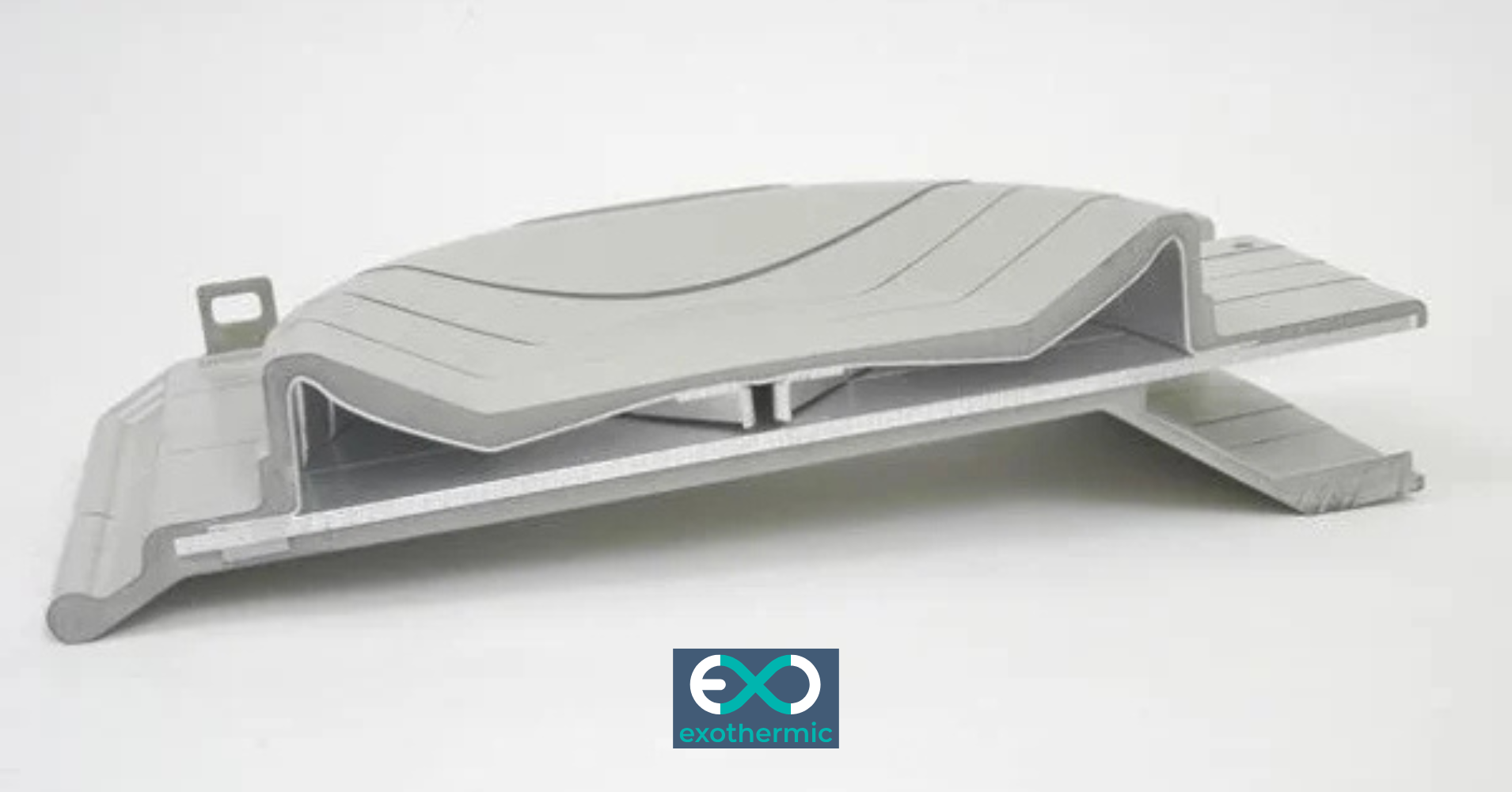
Large enclosures put engineers in a bind. The part is too big and too low-volume to justify an injection mold, but sheet metal fights you on geometry, cosmetics, and the sheer number of pieces it takes to build a finished housing. For instruments, equipment cabinets, and machine covers built in the hundreds or low thousands, neither default process fits well. This is the gap reaction injection molding was built for.
Injection molding runs into tooling economics. A large part requires a large, expensive steel mold, which can cost hundreds of thousands of dollars. Spread across a few thousand units a year, the tooling alone can sink the program. Sheet metal avoids the tooling problem but creates others. Complex curves, integrated features, and a finished cosmetic surface are hard to achieve in metal, so a metal enclosure usually becomes an assembly of formed panels, brackets, and fasteners, with paint and finishing added on top. Every one of those pieces and steps adds cost and a tolerance to manage.
The physics of the process favor size. RIM meters and mixes two low-viscosity liquids, then fills the mold at atmospheric pressure. The pressure inside the mold comes from the reaction itself, building as the material expands and cures rather than from any injection force pushing it in. That distinction matters. Because the tooling never has to resist high injection pressures, molds can be made from aluminum instead of hardened steel, and large molds become practical instead of prohibitive. The low viscosity lets the material fill big, complex cavities completely, so parts measured in feet can be produced with excellent surface finish and dimensional stability. Designers who work with the process value exactly this. RIM is at its best on large, feature-rich parts that would be awkward or impossible to mold any other way.
A large enclosure is rarely a simple box. It has mounting features, vents, recesses, varying wall thickness, and cosmetic detail. RIM absorbs that complexity. Varying wall thickness within a single part is routine, so structural ribs and thin cosmetic skins coexist in one molding. Deep draws and undercuts that would require sliding cores in injection molding are often workable. Features that would be separate brackets in a metal design get molded in. The result is fewer pieces, fewer joints, and a part that looks finished coming out of the tool.
For the volumes where large enclosures usually live, between 100 and 5,000 units a year, RIM's numbers are hard to argue with. Aluminum RIM tooling typically costs 40 to 60 percent less than a comparable injection mold, according to Exothermic's RIM cost data, and the tools are generally ready in 4 to 6 weeks rather than the 12 to 16 weeks a steel injection tool can take. RIM does carry more hand finishing per part, so the per-piece cost is somewhat higher than injection molding, which is precisely why the process fits low-to-medium volume and gives way to injection molding at very high volumes. Against a sheet metal assembly, the comparison is less about tooling and more about the parts and labor RIM removes by consolidating the housing into one molded piece.
The fit is strongest when the part is large, when it carries complex geometry or a cosmetic surface, and when annual volume sits in the hundreds to low thousands. Bring the process in during the concept phase, while the design is still flexible, and a manufacturer can often turn a rough sketch into a budgetary estimate quickly. That early collaboration is where the cost and manufacturability decisions get made.
Parts measured in feet are well within range. The low molding pressure and low-viscosity chemistry make large cavities practical, with good surface finish and dimensional stability.
Amortizing tooling over low quantities favors the RIM process, typically 40 to 60 percent less for runs under 5,000 units, per Exothermic's RIM cost data. Per-part cost is somewhat higher due to finishing, so the advantage holds at low-to-medium volumes.
Sheet metal struggles with complex curves, integrated features, and cosmetic surfaces, and usually requires assembling many pieces. RIM consolidates those into one finished molding.
If you have a large enclosure that does not fit injection molding economics or sheet metal's geometry limits, RIM may be the answer. Share a sketch or model with Exothermic's team and get a budgetary estimate and a manufacturability read as part of an engineering consultation.
