
Why Does RIM Beat Sheet Metal and Injection Molding for Large Enclosures?
Large enclosures put engineers in a bind. The part is too big and too low-volume to justify an ...
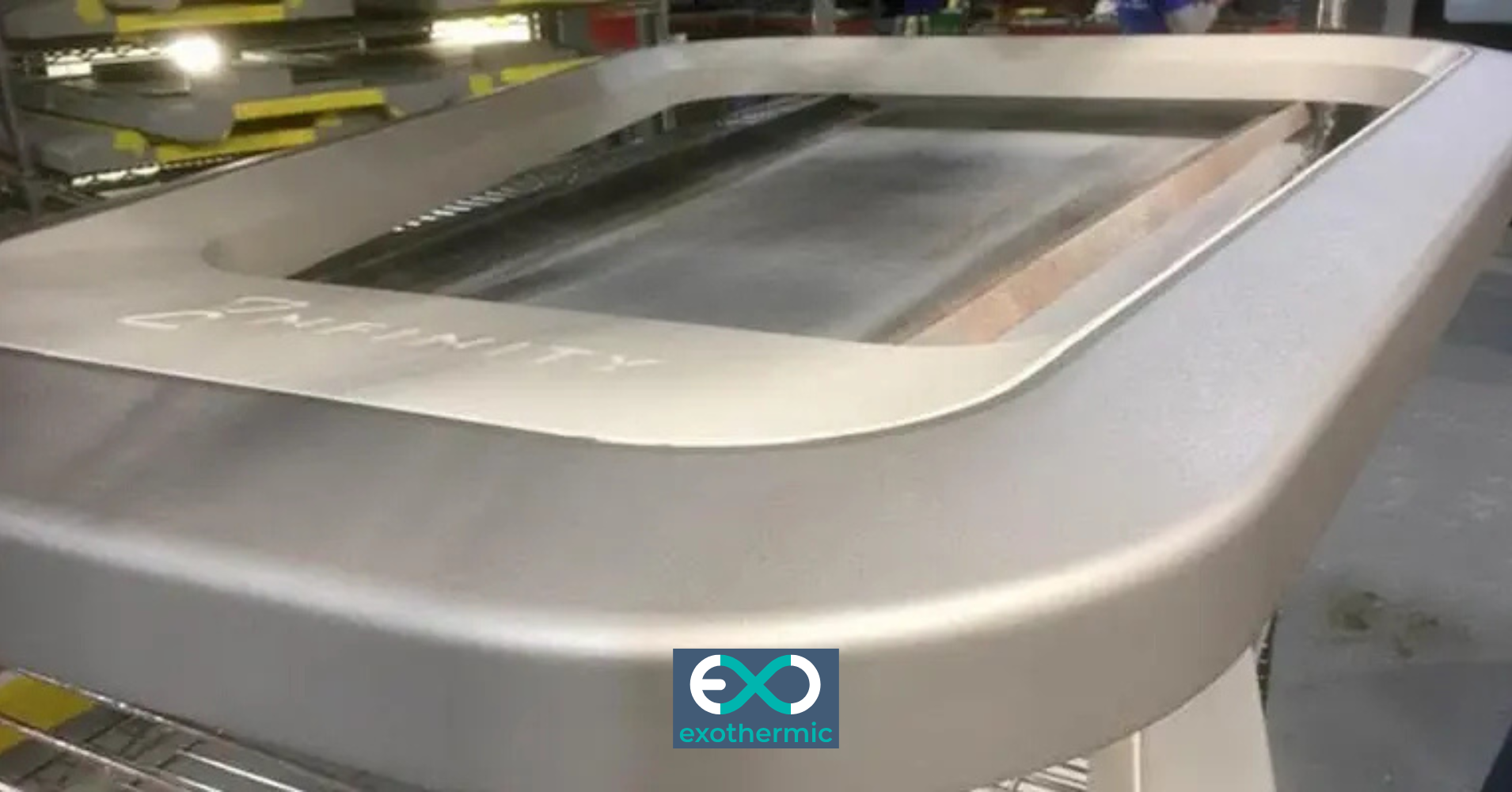
Large plastic parts break the standard injection molding playbook. Press tonnage scales with projected part area, so a four-foot enclosure that would be routine at hand size suddenly requires a press the size of a small building and a steel mold priced to match. Reaction injection molding takes a different route: because it fills the mold at 100 to 200 psi rather than injection molding's thousands of psi, large parts run in aluminum tooling on modest presses, and per the Covestro RIM Part and Mold Design Guide there is no upper limit on part size beyond equipment capability. Here is how the process works for large parts and where its practical limits sit.
Large part injection molding is expensive because clamping force must exceed melt pressure across the part's entire projected area. Double a part's length and width and you quadruple the area, which quadruples the required tonnage. Presses above 2,000 tons are scarce, expensive to run, and booked by high-volume automotive work.
The mold follows the same curve. A large steel injection mold is a major capital project with machining time measured in months, and the 12 to 16 week lead times typical of conventional injection tooling stretch further as size grows. For a program needing 500 or 2,000 large parts per year, the tooling line item alone can exceed the value of several years of production.
This is why large-part buyers so often end up evaluating thermoforming, fiberglass layup, or sheet metal fabrication. Each solves the press problem but surrenders something else: thermoforming cannot mold inside features or variable walls, fiberglass struggles with part-to-part repeatability, and sheet metal turns one molded shape into a welded assembly.
RIM molds large parts by injecting two liquid components at 500 to 1,500 centipoise, roughly the viscosity of syrup, which flow through large cavities at only 50 to 150 psi before reacting and curing in the mold, according to Exothermic's process white paper. Low pressure means low clamping force, which means large parts do not require enormous presses.
Low pressure also changes the tooling material. The Covestro design guide's mold-cost comparison shows machined aluminum at roughly 80 percent and cast aluminum at 60 percent of the cost of equivalent machined steel. Aluminum machines faster too, which is why Exothermic delivers large-part RIM tools in 4 to 6 weeks rather than the 12 to 16 typical of steel injection molds.
The chemistry does the structural work. Polyurethane RIM systems cure into rigid, impact-resistant parts, and structural foam variants like Covestro Baydur 726 and 728 build a dense skin over a foamed core, producing stiff, large panels at manageable weight. Where a program needs still more from the material, Poly-DCPD systems add chemical resistance and a wide operating temperature window, with heat deflection temperatures from 234 to 282 degrees F at 264 psi across formulations listed in the Element Labs ESM Resin Systems User Guide.
There is no inherent upper size limit on RIM parts; the Covestro design guide states the constraints are equipment capacity, and parts heavier than 100 pounds have been produced. Practical limits come from metering machine output, press dimensions, and the chemistry's gel time, not from the process itself.
The same guide offers a useful design note: parts exceeding roughly 50 pounds are often worth evaluating as two or more components joined in assembly, sometimes molded from the same tool, because handling and press logistics can favor modularity. That is a design conversation, not a hard rule, and Exothermic works through it with customers during design for manufacturability review.
Exothermic's history runs in this direction. The company added larger presses and a second metering unit in the early 1990s specifically to mold bigger parts, and has since produced large housings for laboratory diagnostic equipment, exercise equipment, robotic delivery devices, and instrument enclosures measured in feet rather than inches.
Large RIM parts can carry variable wall thickness, molded-in ribs and bosses, deep draws, and encapsulated components, a combination no other large-part process offers in a single molding. Thermoforming and fiberglass produce shells of near-constant thickness; RIM produces engineered structures.
Variable wall thickness is the standout. A single RIM part can move from a thin cosmetic surface to a thick structural mounting section without the sink marks and warp that punish thickness changes in injection molding. That freedom feeds directly into part consolidation: assemblies of five or six formed, fastened components routinely collapse into one molded part, removing fasteners, seams, leak paths, and assembly labor.
Surface finish holds up at size. The low viscosity of RIM components reproduces fine mold detail across large surfaces, and Exothermic's automotive-grade spray finishing produces Class A cosmetic results on parts that will sit in an operating room or a trade show booth. Exothermic's white paper on complex parts documents the Kendro Laboratory Products centrifuge program, where a large, complex housing with an encapsulated aluminum and steel sub-structure delivered the rigidity of metal with the finish of a molded part.
If you are carrying a large part quote that only pencils out at volumes you will not reach, that is the signal to compare processes. Exothermic provides budgetary estimates from rough geometry, usually within days, so you can see the RIM tooling and per-part numbers next to your injection molding or fabrication quote before committing the program.
