
How to Manufacture Large Plastic Parts Without Massive Tooling
Large plastic parts break the standard injection molding playbook. Press tonnage scales with...
By: Paul Steck on Aug 18, 2026, 8:00:01 AM
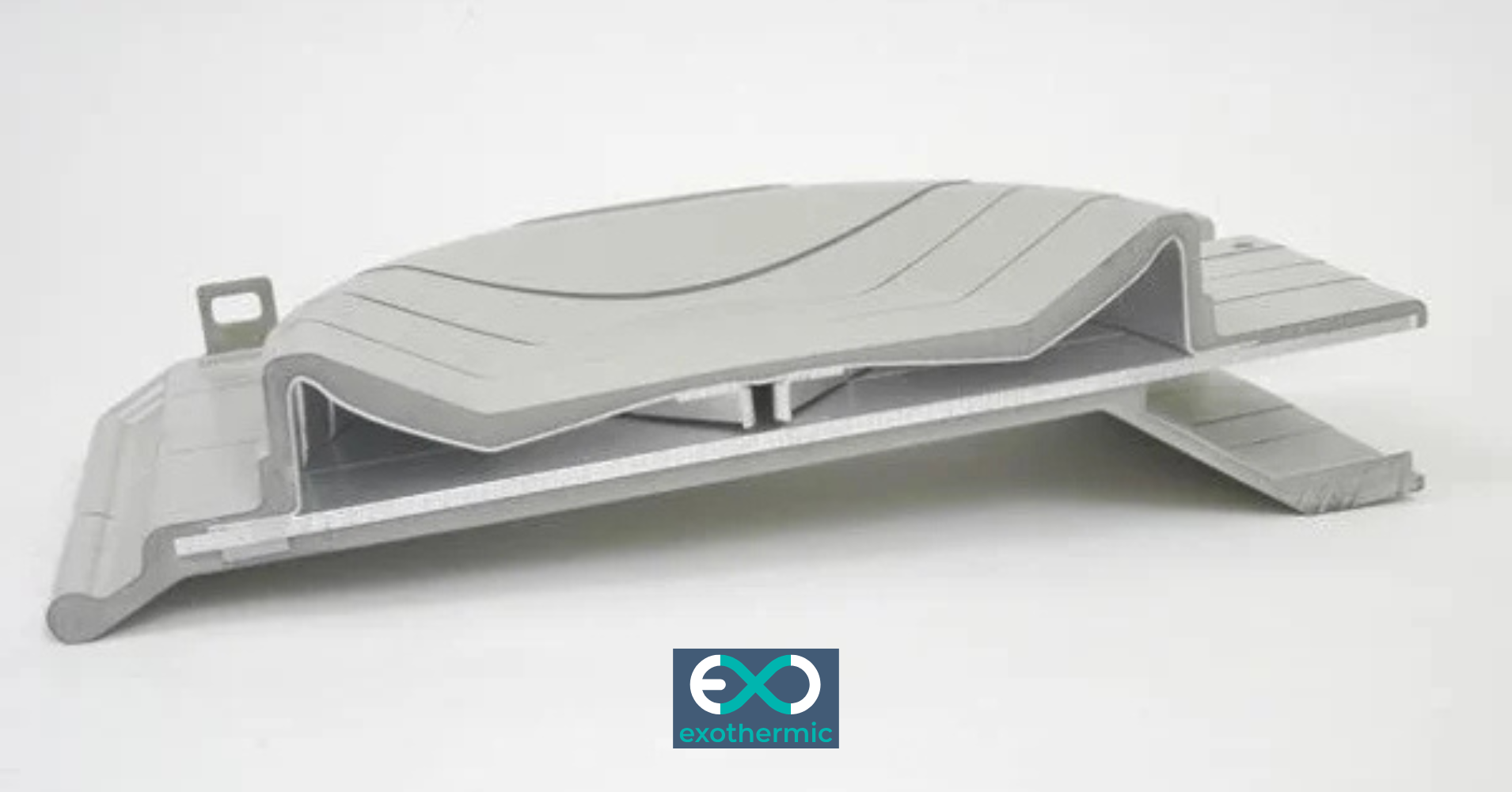
Most searches for custom plastic enclosures end in one of two dead ends: an off-the-shelf box that almost fits, or an injection molding quote sized for volumes the program will not hit. There is a third path. Reaction injection molding produces fully custom enclosures, large sizes, complex geometry, integrated shielding, flame-rated materials, at tooling costs 40 to 60 percent below comparable injection molds and lead times of 4 to 6 weeks. This guide covers what custom really gets you, how to specify shielding and flammability requirements, and what the economics look like between 100 and 5,000 units per year.
Quick answer: Custom plastic enclosures are a good fit for RIM when annual volume is roughly 100 to 5,000 units and a stock box compromises size, mounting, thermal performance, shielding, or appearance. RIM supports large, complex housings with molded-in features, EMI/RFI coatings, flame-rated materials, and lower-cost aluminum tooling.
You need a custom enclosure when the off-the-shelf option forces compromises in size, mounting, thermal design, appearance, or ingress protection that degrade the product. Standard boxes work for prototypes and simple electronics; they stop working when the enclosure is part of the product's identity or its engineering.
The compromises accumulate quietly. A stock box means your board layout conforms to someone else's boss locations. Cutouts are machined after the fact, each one a cosmetic seam and a potential leak path. Branding becomes a label instead of molded-in form. For a benchtop instrument, a diagnostic device, or a piece of capital equipment, the enclosure is the first thing a customer touches, and a generic box says generic product.
Custom molding inverts the relationship: the enclosure is designed around the device. Mounting bosses land where the chassis needs them, vents and ports are molded in, and the industrial design your team paid for survives into production. Exothermic has built custom housings and instrument enclosures since 1971, beginning with computer housings that ended up in the White House, and the specification conversation has been remarkably stable across five decades: fit, protection, finish, and volume.
RIM fits custom enclosures because it handles the exact combination enclosures demand: large panels, thin cosmetic walls next to thick structural sections, molded-in mounting features, and production volumes in the hundreds to low thousands. The process molds at 50 to 150 psi per Exothermic's process white paper, so aluminum tooling delivers all of that at 40 to 60 percent lower cost than injection mold tooling.
Wall thickness freedom matters more in enclosures than almost any other part category. An enclosure wants a thin, uniform outer skin for appearance and weight, plus thick bosses for fasteners, standoffs for boards, and ribs for stiffness. Injection molding fights that combination; RIM was built for it.
Part consolidation follows. A bezel, a chassis panel, mounting brackets, and a cable clamp can merge into one molded component, which removes assembly steps and the tolerance stack-up between them. Where a program needs sub-assembly beyond molding, Exothermic provides value-added assembly, delivering the enclosure with inserts, gaskets, and hardware installed.
Yes. RIM enclosures accept conductive coatings applied after molding that provide EMI and RFI shielding comparable to metal housings, without metal's weight, corrosion, or fabrication seams. Shielding is specified during design so coating coverage, grounding points, and aperture control are engineered rather than retrofitted.
The shielding conversation belongs at the same design review as the structural one. Aperture size and placement govern shielding effectiveness as much as coating conductivity does, so vents, display windows, and connector cutouts get planned against the frequency ranges the device must contain or reject. Exothermic applies RFI and EMI shielding in-house as part of its finishing operation, alongside automotive-grade multi-color spray finishes and silk-screened graphics, which keeps the shielded, decorated enclosure a single-supplier deliverable.
For devices where electronics need environmental protection beyond shielding, RIM offers encapsulation: boards, antennas, and sensors molded directly inside the polymer at temperatures and pressures low enough not to damage them. Exothermic has encapsulated PCBs, batteries, LCDs, and wire harnesses in production programs.
Flame-rated RIM materials are production-proven: Covestro Baydur 726 and 728 structural foam systems carry UL 94 V-0 flammability ratings, the standard most equipment specifications reference for enclosure plastics. Material selection is application-driven, matched to the thermal, chemical, and impact demands of the device.
Temperature capability varies by system, so specify against the real operating envelope. Poly-DCPD formulations documented in the Element Labs ESM Resin Systems User Guide show glass transition temperatures up to 272 degrees F and heat deflection temperatures from 234 to 282 degrees F at 264 psi, along with acid and alkali resistance and low water absorption, properties that matter for enclosures headed into industrial or outdoor service. Polyurethane systems cover the broad middle of enclosure requirements with excellent impact resistance and finish quality.
The right answer is rarely the most exotic material. Exothermic's material selection process starts with the requirement list, operating temperature, chemical exposure, flammability spec, impact environment, and works toward the least costly system that meets it.
At 100 to 5,000 units annually, a custom RIM enclosure program typically requires 40 to 60 percent less tooling investment than injection molding, with tools delivered in 4 to 6 weeks, making custom economically rational at volumes where injection molding forces a retreat to off-the-shelf boxes. Per-part cost runs higher than injection molding, so the total program math, not the piece price, drives the decision.
The comparison worth running is not RIM versus injection molding; at these volumes it is usually RIM versus the compromise of a stock enclosure plus machining, or versus fabricated sheet metal. Count the machining operations, the assembly labor, the finishing steps, and the engineering time spent bending the product around the box. Molded-in features eliminate most of those line items.
Exothermic quotes from CAD models or rough concept sketches and returns budgetary numbers quickly, a practice long-time design firm partners cite as the reason RIM gets evaluated early in their concept phase instead of after the injection molding quote fails. If your enclosure is stuck between a box that does not fit and a mold you cannot justify, send the geometry and volume, and get the third option priced.
Large plastic parts break the standard injection molding playbook. Press tonnage scales with...
Most companies discover design improvements after their first production run. A feature needs...
If you are running between 100 and 5,000 parts a year, reaction injection molding almost always...