
The Advantages of Reaction Injection Molding (RIM) for Complex Parts
Industrial designers face a variety of material choices when creating products, including metal,...
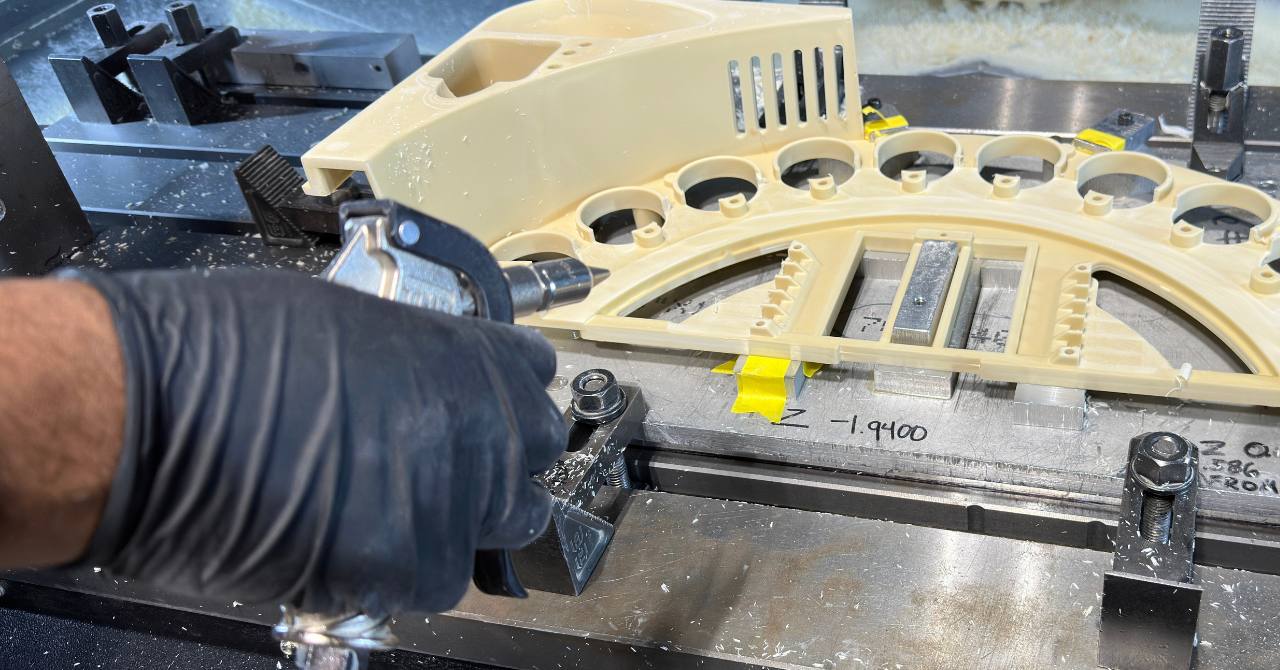
You've identified Reaction Injection Molding as the right manufacturing process for your part. The design freedoms align with your requirements. The material properties meet your specifications. The lead times work for your schedule. Now you need to convince procurement.
This is where many RIM projects stall. Procurement teams compare quotes using familiar metrics—primarily per-part cost—and RIM often looks more expensive than injection molding on that single dimension. The conversation ends before the full picture emerges.
The problem isn't that RIM costs more. The problem is that per-part cost is the wrong metric for the comparison. Building an effective business case requires reframing the analysis around total cost of ownership, where RIM's advantages become clear.
When procurement receives a quote for injection molded parts and a quote for RIM parts, the injection molding price per piece is typically lower. This makes sense—injection molding is optimized for high-volume efficiency. The process runs faster cycles and uses less material per part in many cases.
But that per-part number excludes critical cost drivers that shift the equation. Tooling investment, secondary operations, assembly labor, inventory carrying costs, and time-to-market value all factor into what you actually spend to get finished products into customers' hands.
For production volumes between 100 and 5,000 units annually—the range where most RIM projects live—these other factors often dwarf the per-part price difference.
RIM tooling typically costs roughly half what comparable injection molding tooling costs. The difference stems from fundamental process differences. Injection molding requires hardened steel tools capable of withstanding 20,000 psi injection pressures and thousands of degrees of heat cycling. RIM operates at 50-150 psi with much lower thermal demands, allowing aluminum tooling that costs less to machine and finishes faster.
This tooling cost difference matters enormously at lower volumes because you're amortizing the investment across fewer parts. Consider a simplified example. Suppose injection molding tooling costs $150,000 and RIM tooling costs $75,000. At 5,000 parts per year over a five-year tool life, the injection mold adds $6 per part in amortized tooling cost. The RIM tool adds $3 per part. That $3 difference closes much of the gap in quoted per-part prices before you examine anything else.
At lower volumes, the effect amplifies. At 1,000 parts per year, the injection mold adds $30 per part in tooling amortization. The RIM tool adds $15. The math increasingly favors RIM as volumes decrease.
Procurement may not perform this amortization calculation automatically. They see the quoted piece price and the quoted tooling price as separate line items. Presenting the fully-loaded part cost—piece price plus amortized tooling—puts the comparison on equal footing.
Injection molded parts often require secondary operations that RIM parts do not. These operations carry costs that may not appear in the molding quote but appear somewhere in your total manufacturing spend.
Part consolidation is the most significant factor. RIM's ability to mold variable wall thicknesses and complex geometries means assemblies that require multiple injection molded components can sometimes become a single RIM part. Each eliminated component removes a purchase order, an incoming inspection, an inventory line, and an assembly step. Each eliminated fastener removes hardware cost and installation labor.
If a RIM part consolidates what would otherwise be three injection molded parts plus hardware and assembly, the comparison isn't one RIM part versus one injection molded part. It's one RIM part versus three parts, twelve fasteners, and twenty minutes of assembly labor.
Encapsulation creates similar savings. Metal structural members, electronics, brackets, and inserts molded directly into a RIM part eliminate assembly operations that would otherwise happen downstream. The RIM quote looks higher because it includes these components. The injection molding quote looks lower because those components and their assembly appear elsewhere in your cost structure.
Map your full bill of materials and assembly sequence for both scenarios. The consolidated view often surprises procurement teams who initially focused only on the molded part itself.
RIM tooling typically delivers in four to six weeks. Injection molding tooling often requires twelve to sixteen weeks. This difference has financial value, though it's harder to put in a spreadsheet.
Faster tooling means faster time to market. For new products, earlier revenue recognition improves project economics. For replacement parts, reduced time without a production source minimizes disruption. For design iterations, shorter cycles let you validate changes and move forward rather than waiting months to test modifications.
Lead time also affects inventory strategy. Longer tooling lead times force you to forecast further into the future and carry more safety stock. Shorter lead times let you operate leaner, with less capital tied up in inventory and less risk of obsolescence.
If your organization values speed—and most do when pressed—frame the lead time difference in terms that resonate. How much is eight to ten weeks of schedule acceleration worth to your product launch? What does carrying three extra months of safety stock cost in working capital?
Beyond cost, procurement may hesitate simply because RIM is unfamiliar. Injection molding is the default assumption for plastic parts. It's what they've bought before, what their approved supplier list supports, and what their comparison databases contain.
Unfamiliarity isn't a technical objection—it's a risk perception. Address it by reducing perceived risk rather than arguing against it.
Reference established applications in your industry. RIM has decades of production history in medical equipment, automotive, aerospace, and industrial applications. Parts are in service today in demanding environments, performing reliably.
Propose a pilot approach if appropriate. Starting with a lower-risk component builds organizational experience before committing larger programs.
Offer to connect procurement with your manufacturing partner directly. Facility tours, process explanations, and quality system reviews help procurement teams get comfortable with an unfamiliar process.
When you bring the business case to procurement or leadership, structure it around total cost of ownership rather than leading with per-part price. Show tooling costs amortized across realistic production volumes over the expected tool life. Include all components that consolidate into the RIM part, not just the primary molded piece. Add assembly labor and hardware that the RIM approach eliminates. Quantify lead time value in terms your organization recognizes—revenue acceleration, inventory reduction, or schedule risk mitigation.
The goal isn't to hide the higher per-part price. It's to put that price in proper context alongside every other cost that contributes to what you actually spend. When the full picture emerges, the RIM business case often makes itself.
