
The Strategic Value of Outsourced Sub-Assembly for Manufacturers
In today's competitive manufacturing landscape, companies continuously seek ways to optimize their...
"Small is beautiful, and we have proven it for over 50 years," says Paul K. Steck, President of Exothermic Molding, Inc. Established in Kenilworth, NJ, Exothermic Molding has spent over five decades refining its approach to high-precision, small-scale manufacturing. The company's foundation rests on a dual technological framework that combines pioneering Reaction Injection Molding (RIM) expertise with contemporary additive manufacturing capabilities.
As an early adopter of RIM technology, Exothermic developed specialized processes for low-pressure molding, particularly suited for complex geometries and varied wall thicknesses in polyurethanes and other thermoset polymers. This traditional expertise has been augmented with advanced large-format 3D printing capabilities, creating a hybrid manufacturing environment that maximizes the benefits of both methodologies.
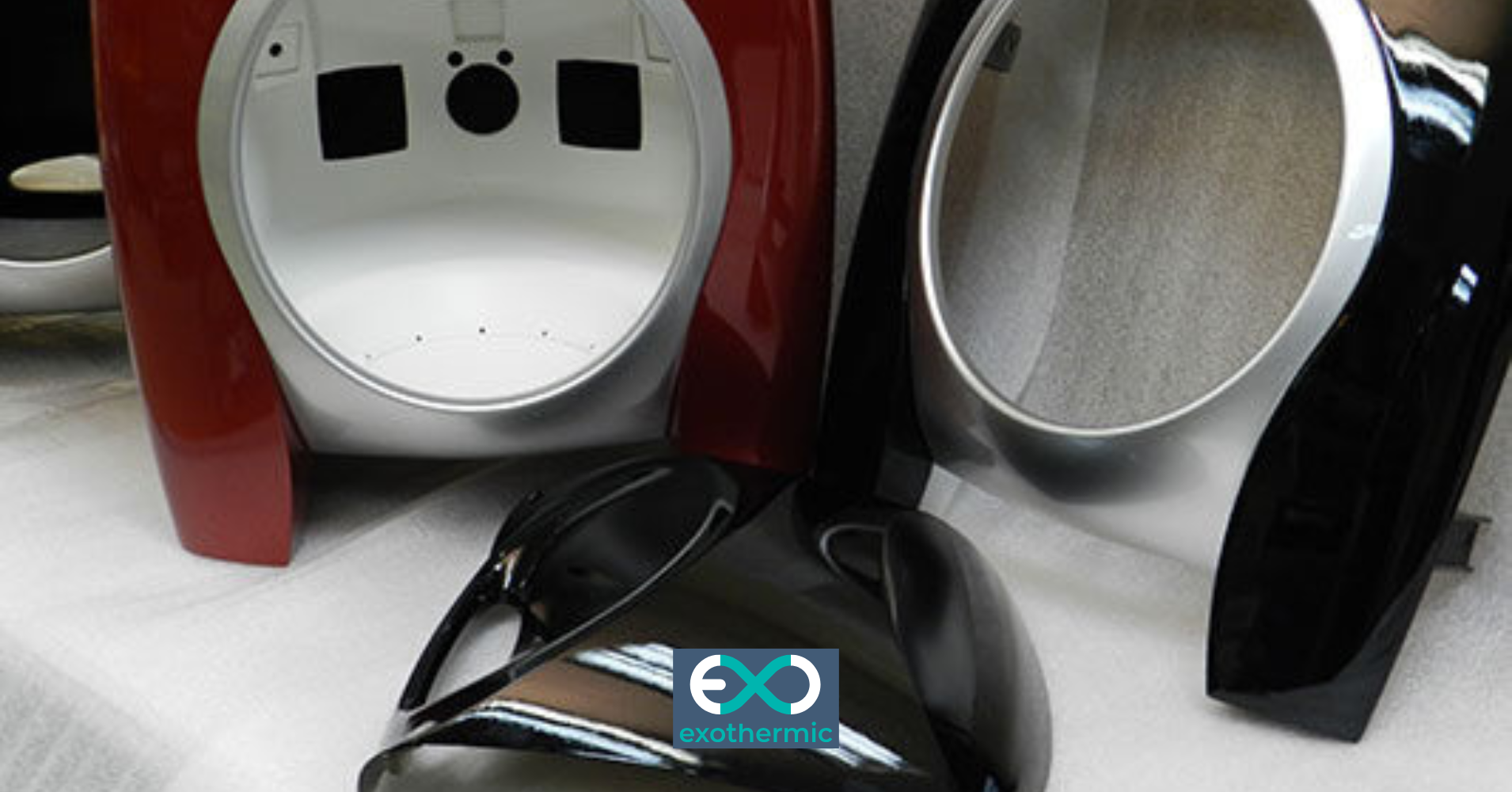
Surface finishing represents a critical differentiator in Exothermic's technical capabilities. "The typical output from a 3D printer is rough, and often needs hand finishing," Steck remarks. The company operates three dedicated spray booth facilities equipped with automotive-grade paint systems and custom silk screening capabilities.
This finishing expertise extends across both traditionally molded and additively manufactured components, ensuring consistent quality across all production methods.
Exothermic's engineering services encompass comprehensive design support, including sophisticated Design for Manufacturing (DFM) consultation and mold design optimization. Through integrated CAD/CAM systems and advanced laser scanning capabilities, Exothermic provides detailed reverse engineering services for legacy parts that need updated documentation or redesign.
Manufacturing support extends beyond basic production to include prototype development, material selection consulting, and specialized color matching services. Quality assurance is maintained through advanced metrology services, dimensional analysis, and rigorous surface quality verification protocols.
In the medical device sector, Exothermic has demonstrated particular expertise in meeting extremely demanding surface finish requirements. Work in this sector necessitates strict adherence to biocompatibility standards and precise tolerances, typically maintaining accuracy within ±0.001 inches.
This precision extends to laboratory instrumentation, military applications requiring MIL-SPEC compliance, and high-durability components for exercise equipment. Defense contractors and aerospace manufacturers benefit from RIM's ability to produce large, complex parts with superior impact resistance and chemical stability.
The hybrid manufacturing approach represents a significant innovation in process integration. By combining additive and traditional manufacturing methods, Exothermic optimizes material selection and production scaling while reducing time-to-market. RIM tooling can typically be delivered in 4-6 weeks compared to 12-16 weeks for traditional injection molds, and tooling costs run significantly lower since molds are machined from aluminum rather than hardened steel.
Steck points out that they "contribute to customer's successful outcomes and lead the field for a number of reasons. As the company's own customer surveys show, they consistently meet quality and market expectations by providing ongoing contributions in numerous phases and areas of product development."
Value-added services include sophisticated assembly operations, with capabilities extending to complex sub-assembly integration and comprehensive quality verification. Product development support encompasses iterative prototyping, material testing, and performance validation services.
Manufacturing parameters accommodate varied part sizes with typical tolerances of ±0.005 inches, though tighter tolerances are achievable when required.
RIM production is ideally suited for annual volumes between 100 and 5,000 parts, where the lower tooling investment significantly offsets per-unit costs compared to injection molding.
Quality control infrastructure includes coordinate measuring machines, surface roughness measurement systems, optical comparison capabilities, and environmental testing facilities. As an ISO 9001:2015 certified facility, this comprehensive testing regime ensures consistent quality across all production runs, regardless of complexity or scale.
Looking toward future developments, Exothermic Molding maintains active investment in advanced material development, process automation, and enhanced quality control systems. When asked about what's next for this nimble, forward-thinking shop, Paul K. Steck just winks, with a "wait and you'll see soon" look.
